


Opioid Recovery Requires Spectrum of Care
When your brain calms down, after you regularly see a counselor or join a group, then you start to move. – Renee Klaric
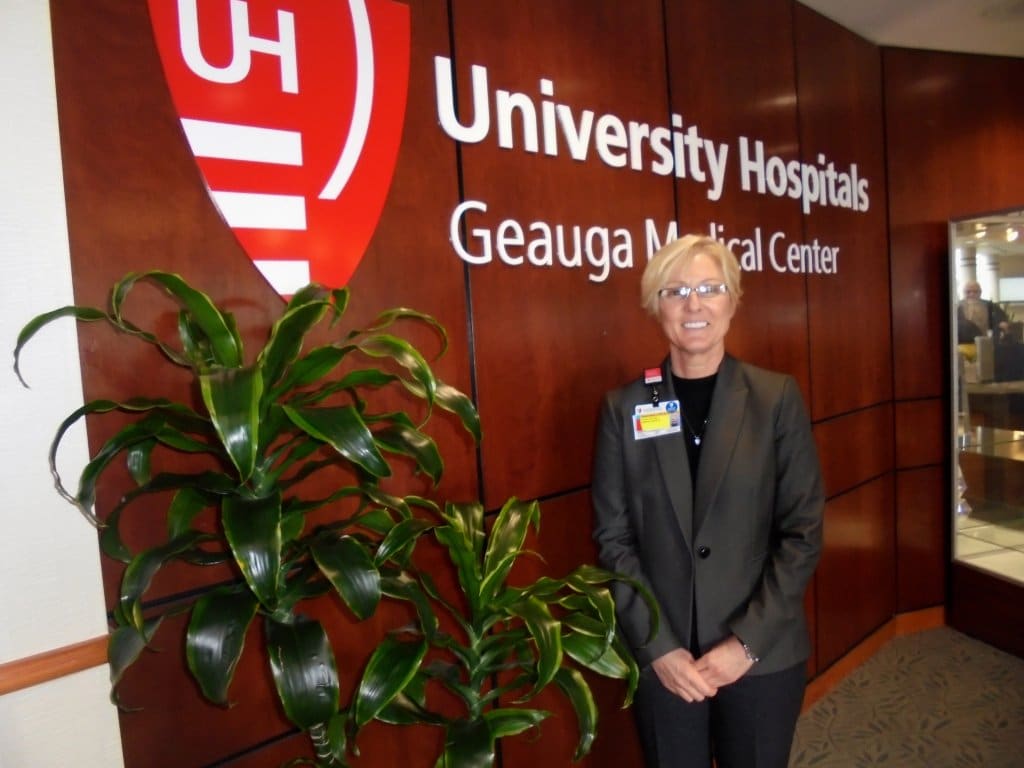
At any one time, there are as many as 20 patients at University Hospitals Geauga Medical Center being treated for withdrawal from opioids, said Renee Klaric, medical support program manager.
A similar number are in treatment in the program she manages at the UH Portage Medical Center, she said.
Across the country, there are many more addicts wanting to kick the deadly habit than there are programs to help them.
In 2016-2017, more than 43,000 people died in the U.S. from drug-related causes, Klaric said, adding only about 10 percent of those who need help actively seek it.
Demand for treatment to help addicts get off and stay off the drugs led UH to develop a strict regimen about five years ago primarily using the prescription drug Suboxone, or buprenorphine, Klaric said
Suboxone partially blocks the opioid receptors and levels out the highs and lows caused by the drugs while removing the brain’s demand for more drugs.
Addicts wanting to start recovery call the UH medically assisted treatment program and are admitted for a three-day stay, Klaric said.
The patient’s treatment plan is a priority.
“Before they even come in, we are working on their discharge. It’s all mapped out,” Klaric said.
Once the patient is medically discharged, he or she is scheduled for an appointment with a medical doctor. That physician will monitor the patient’s progress and medication for up to a year.
It is a process necessary for anyone being treated for a chronic disease, and that is exactly how UH Geauga Medical Center treats individuals addicted to alcohol or drugs, Klaric said.
Use of opioids alters the brain, so an addict will chronically relapse to drug use without medical intervention.
“People need this medication to handle their disease. It’s no different from diabetes,” Klaric said, adding patients suffering from addiction take Suboxone for at least two years.
VIVITROL is an alternate medication. The program also supports abstinence if that is the patient’s wish, Klaric said
By the time an addict seeks help, his or her life is out of control and the opioid has taken over. The only solution is a total lifestyle change, which the program orchestrates, she said.
“We say, ‘Get on the medication, manage your disease and all your energy can go toward a lifestyle change,’” Klaric said.
If the addict is also suffering from a trauma or mental disorder other than addiction, treatment includes therapy to address those issues, she said.
The patient is urged to find a support group and/or start an exercise routine to keep balanced.
“It is a continuum of care – whatever works for them,” Klaric said.
UH has added an intervention specialist who can work with the addict and relatives or friends to keep the momentum positive.
Linking the patients to services is vital to reclaiming a normal life, Klaric said.
A good relationship between the primary care physician and the patient is essential as well. If the addict tries to go without Suboxone and relapses, he or she must be able to trust the doctor to support their return to sobriety, Klaric said.
This longitudinal care – medication, primary physician, therapy relationships and lifestyle change – usually stabilizes the patient in about six months, she added.
“When your brain calms down, after you regularly see a counselor or join a group, then you start to move,” she said. “You’ve taken your disease off the table and all your energy goes to lifestyle.”
Those changes, nurtured by therapy and group sessions, include adopting better health practices and establishing a new circle of friends who aren’t into drugs or alcohol, Klaric said.
“Once they are on medication, they naturally gravitate to healthier things. I think it is very empowering,” she added.
At the end of the year, with continuous care and medication, the program has 40 to 60 percent of patients sober, she said.
Just going through a detoxification process and depending on will-power to stay away from opioids or other “morphine equivalents” is far less likely to succeed. The un-medicated brain screams for a return to opioids and the pain is very hard to resist, Klaric said.
But going back to the drugs to alleviate the pain can be a death sentence.
When a person has been off opioids for a while, the body’s resistance to the substance can erode. By using the same amount the addict used before treatment, an overdose is likely, Klaric explained.
Also, if the substance being consumed contains the much stronger opioids fentanyl or carfentanyl, an overdose is very probable, she said.
“They have no idea what they are taking,” Klaric said.
It is no secret that, in the past, physicians did not understand the addiction dangers of some of the drugs they were prescribing, especially since the medical community generally did not screen for addiction markers, such as alcoholism in a patient’s family, she said.
Since alcoholism has become recognized as a disease that runs in families, physicians are more careful about prescribing medication for pain that is related to morphine, Klaric said.
In light of the opioid crisis, the Centers for Disease Control and Prevention has re-written its regulations on pain intervention to limit the type and amount of pain medication that should be prescribed, she said.
Contrary to popular belief, most addicts are not young. The average age of those in treatment in the UH program is 44, Klaric said.
Individuals often became addicted when they were prescribed pain medication for injuries so they could still function and work.
Recently, UH has developed alternative treatments like acupuncture and massage therapy to help manage pain, Klaric added.


